


 English
 Portugues
 Pусский
 العربية
válvula de control
Una válvula de control es un componente importante utilizado en muchos sistemas industriales para regular el caudal, la presión, la temperatura o el nivel de fluidos como líquidos, gases o vapor. Funciona modificando el tamaño del paso de flujo según las señales recibidas de un controlador, lo que ayuda a mantener las condiciones del proceso en el punto de ajuste deseado. Gracias a esta función, las válvulas de control se utilizan ampliamente en industrias tales como la de petróleo y gas, procesamiento químico, generación de electricidad, tratamiento de aguas, farmacéutica y producción de alimentos.
La estructura básica de una válvula de control generalmente incluye un cuerpo, una tapa o bonnet, un trim, un actuador y un posicionador. El cuerpo de la válvula contiene el paso interno por donde circula el fluido. El trim se refiere a las partes internas que controlan directamente el flujo, como el obturador, el asiento, la jaula y el vástago. Estas piezas están diseñadas para soportar diferentes condiciones de servicio y ayudan a lograr una estrangulación precisa. El actuador proporciona la fuerza necesaria para mover el obturador o el disco de la válvula. Puede ser neumático, eléctrico o hidráulico, según la aplicación. Un posicionador mejora la precisión al garantizar que la válvula se mueva a la posición exacta requerida por el sensor.
Las válvulas de control se pueden clasificar de varias maneras. Según el movimiento, se dividen comúnmente en válvulas de movimiento lineal y válvulas de movimiento rotativo. Las válvulas de movimiento lineal incluyen válvulas de globo, válvulas de diafragma y válvulas de control tipo compuerta. Las válvulas de movimiento rotativo incluyen válvulas de bola, válvulas de mariposa y válvulas de macho. Cada tipo tiene sus propias ventajas. Por ejemplo, las válvulas de globo se utilizan a menudo para un control preciso, mientras que las válvulas de bola y de mariposa se prefieren por su baja pérdida de carga y velocidad de operación.
El rendimiento de una válvula de control depende de factores como las características de caudal, las presiones del sistema, la rangoabilidad, la clase de estanqueidad y la velocidad de respuesta. La característica de caudal describe cómo cambia el caudal a medida que la válvula se abre o se cierra. Las características comunes incluyen lineal, porcentaje igual y apertura rápida. La selección adecuada de estas características es esencial para un control de proceso estable y eficiente.
Las válvulas de control deben seleccionarse cuidadosamente según las condiciones del proceso, tales como el tipo de fluido, la temperatura, la presión, el caudal y la resistencia a la corrosión. Además, el material de la válvula debe coincidir con la aplicación para garantizar un rendimiento seguro y prolongado. También son necesarias la inspección y el mantenimiento periódicos para prevenir el desgaste, la corrosión, las fugas o el mal funcionamiento.
En la automatización industrial moderna, las válvulas de control desempeñan un papel clave en la mejora de la eficiencia, la calidad del producto y la seguridad. A menudo se conectan a sensores, transmisores y sistemas de control que monitorean continuamente las variables del proceso. Al responder de forma rápida y precisa, las válvulas de control ayudan a los operarios a lograr un mejor control de procesos complejos.
En conclusión, una válvula de control es un dispositivo crítico para la gestión del flujo de fluidos en sistemas industriales. Su funcionamiento confiable contribuye a la estabilidad del proceso, la eficiencia energética y la producción segura.
Producto
Categoría:
Válvula de control
-
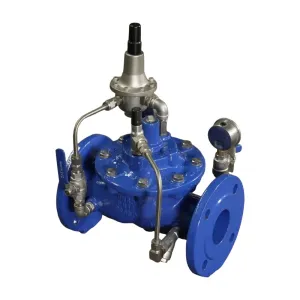
Válvula reductora de presión
Su clasificación: Válvula de controlVistas: 139Número:Tiempo de liberación: 2026-08-25 19:02:54La válvula de control es una válvula de control automático accionada por diafragma, diseñada para la regulación y el control fiables del caudal y la presión del agua en sistemas de tuberías. Utiliza la presión hidráulica para accionar la válvula principal, eliminando la necesidad de una fuente de energía externa. -
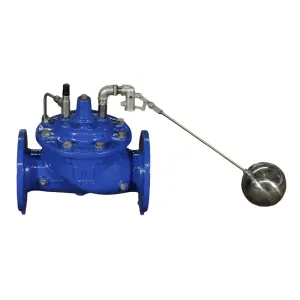
válvula de flotador
Su clasificación: Válvula de controlVistas: 179Número:Tiempo de liberación: 2026-08-25 19:08:59Válvula de Control es una válvula de control automática operada por diafragma, diseñada para una regulación y control fiables del caudal y la presión del agua en sistemas de tuberías. Utiliza presión hidráulica para operar la válvula principal, eliminando la necesidad de una fuente de energía externa.
Noticias
Categoría:
¡Sin resultados de búsqueda!
Caso
Categoría:
¡Sin resultados de búsqueda!
Video
Categoría:
¡Sin resultados de búsqueda!
Descargar
Categoría:
¡Sin resultados de búsqueda!
Reclutamiento
Categoría:
¡Sin resultados de búsqueda!
Productos recomendados
¡Sin resultados de búsqueda!



 Whatsapp
 Teléfono